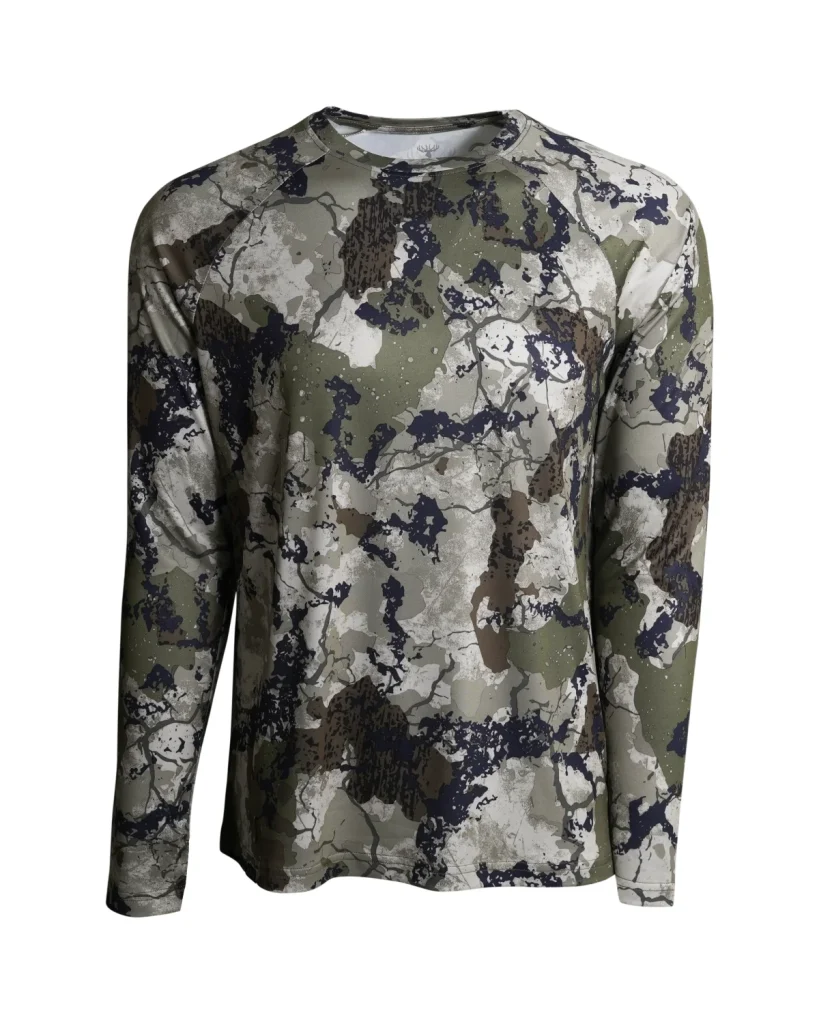
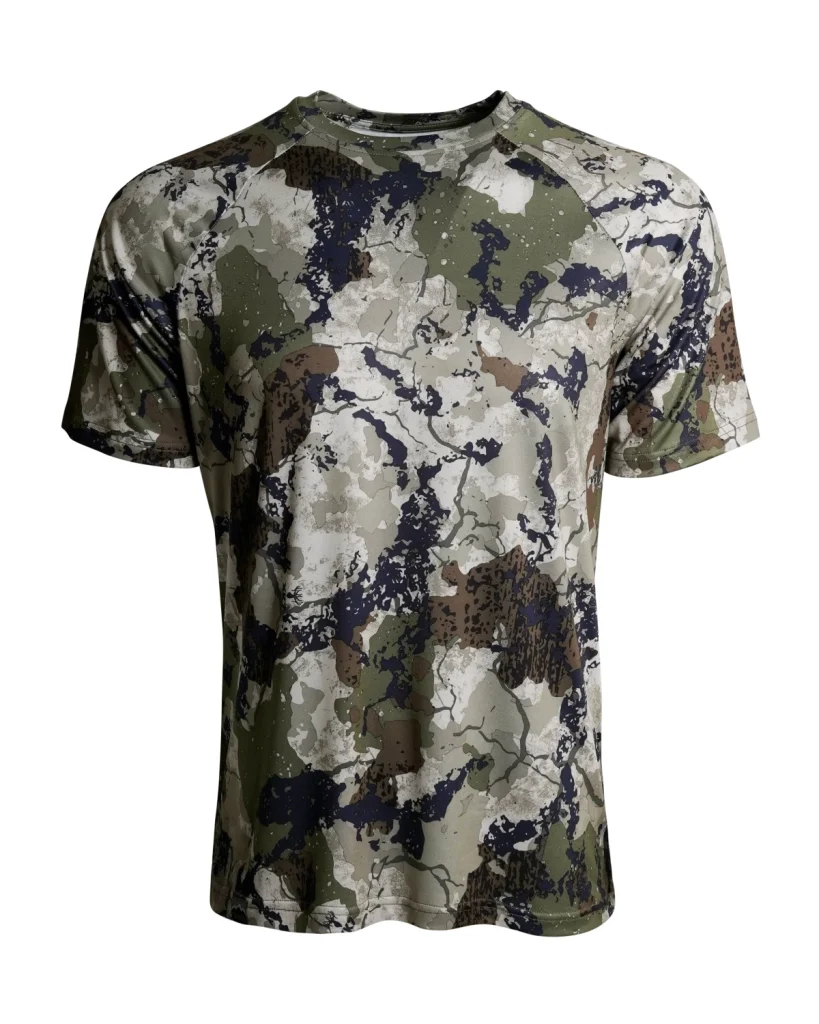
Lay out the outfit you expect to wear in the afternoon, after the heavier layer comes off. Would you want covered forearms then? That question makes the Performance sleeve choice clearer than trying to rank two shirts with the same published blend.
The sleeve decision survives the layer change
Justin describes the long-sleeve tee serving underneath other clothing and then alone. Clayton’s short-sleeve report describes humid seated use. Both support useful roles; neither measures how the other shirt would have performed.
- Keep long sleeves when you want that coverage to stay with the first layer, and verify that cuffs remain comfortable through your reach.
- Choose short sleeves when leaving the forearms uncovered is deliberate, rather than an accidental result of removing a jacket.
- If you actually need an adjustable collar or a hood, neither sleeve change supplies that feature.
What is shared, and what is not
Both listings specify 96% polyester/4% spandex jersey and four-way stretch. Their complete garments and owner records remain separate. Performance Long Sleeve lists 7.1 oz without a size basis; Short Sleeve has no verified garment weight. A copied long-sleeve sentence on the short-sleeve page does not merge their identities.
For a fabric-feel decision within short sleeves, use the Elevation comparison instead. This pair is useful for coverage, not a cooling or durability ranking.