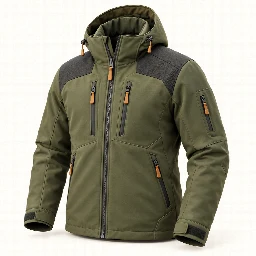
Hunter Wind-Defender Fleece Jacket Review: A Wind Layer With Cuffs and Rain Limits to Check
At a Glance
A wind-facing fleece layer with practical layered-use support; cuffs, carrying burden and untaped rain construction remain important.
Construction & features
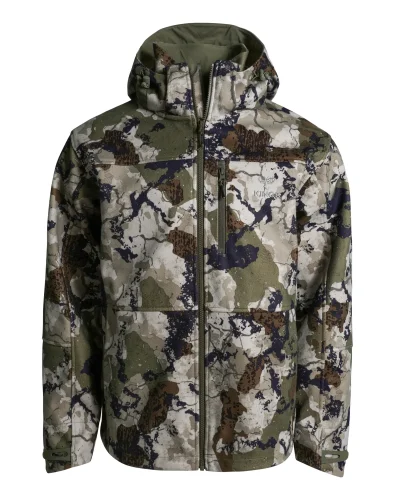
- Fleece exterior and mesh inner liner
- Wind-Defender membrane; seams not taped or fully sealed
- Detachable hood
- Two hand pockets and chest pocket
- 33.4 oz listed; size not supplied
+ What stands out
- Owners report wind blocking over insulating layers
- Room and lining can ease layering
- Removable hood and chest storage are appreciated
↗ Check before buying
- Warmth alone is insufficient for some outfits
- Cuffs can be tight or collect debris
- One historical hood-adjuster anchor failure
- Not a fully sealed rain shell
- Sound and sizing accounts conflict
- One owner rejects the carrying burden for long hikes
Price and availability subject to change
Hunter Wind-Defender is most convincing as the layer that lets insulation underneath do its job in wind. Jared describes that role over two seasons on exposed Wyoming faces. It is less convincing as a substitute for either substantial insulation or a sealed rain shell.
Keep the wind layer separate from the warmth beneath it
Kaden uses it over a Covert hoodie on a windy shed hunt. Jared likes room that does not compress the layers beneath. David, however, expected more insulation, and Nick felt cold despite a thermal shirt and fleece hoodie. Their outfits and conditions differ; averaging them into a cold limit would discard the useful detail.
The hand opening can decide a good torso fit
Brandon finds the cuffs tight even bare-handed and more difficult with gloves. Ross reports debris collecting in the hook-and-loop cuffs and a hood-adjustment elastic detaching at its anchor after an outing. These are specific historical controls issues, not a calculated defect rate.
| A useful report | Its boundary |
|---|---|
| C. P. likes the removable hood and smooth layering | A preference, not proof that every cuff will fit |
| Bob’s shoulders get damp in rain | Consistent with the documented untaped seams |
| Anthony gives the jacket away because of sound | Contrasts with Jared and other quiet-use accounts |
The exact listing explicitly says the waterproof membrane is not paired with taped or fully sealed seams. It lists 33.4 oz without a measured size. One owner considers it too weighty for a long pack-in, so decide whether you expect to wear it or carry it most of the day.
The Tracker comparison examines a different hood and neckline arrangement without promising a rain-performance upgrade.
Pros & Cons Analysis
Based on the attributed sources and product documentation discussed above
Pros
- A role over insulation is demonstrated. Jared describes two seasons of exposed glassing with layers beneath; Kaden uses a hoodie. These are concrete routines, not proof of a jacket-only temperature rating.
- Layer transitions can be comfortable. C. P. likes the smooth lining and removable hood; David reports a successful fit with or without extra clothing.
- Accessible storage has specific praise. David P. values the outside chest pocket’s room. It is useful evidence for an item-access check, not a capacity measurement.
Cons
- Wind blocking is not enough insulation for everyone. Nick describes being chilled in his layered outfit, while David finds the jacket thin. Favorable warmth accounts remain separate.
- Hands must pass through the cuff. Brandon’s tight hand entry and Ross’s debris collection affect actual use even when the chest fits.
- An adjustment failed in one historical account. Ross reports the hood elastic detaching at its internal anchor. Current-edition equivalence and frequency are unresolved.
- Rain reaches the garment’s construction limit. Bob reports damp shoulders; the official untaped-seam caveat prevents calling it equivalent to sealed rainwear.
- Sound and size do not have one verdict. Anthony rejects the noise, while other users call it quiet. Bradley’s small 4XL and Tim’s oversized 2XL also prevent a single sizing instruction.
- Carrying is a separate tradeoff. One owner would not pack the weight for a long hike even while liking it as a worn outer layer.
Buy the wind layer with the hand access checked
Keep Hunter Wind-Defender when it fits over working insulation, its cuffs admit your hands and gloves, and the received sound suits the task.Choose a different construction for sustained rain or when the coat’s carrying burden makes it stay home.
Frequently Asked Questions
Are its seams fully sealed?
No. The exact manufacturer description explicitly says seams are not taped or fully sealed.
Does the hood-adjuster report establish a current defect rate?
No. It is one historical event without verified current-edition equivalence or a population denominator.
Technical Specifications
| Model | Hunter Wind-Defender Fleece Jacket |
|---|---|
| Edition | KCM1650; historical owner editions not verified |
| Intended fit / audience | Adult selected US listing; exact wearer fit must be checked |
| Fabric composition | Polyester fleece exterior; mesh inner liner |
| Fabric density | Not verified |
| Stretch construction | Not verified |
| Insulation type | Fleece construction |
| Insulation fill weight | Not applicable: fleece fabric, not separate fill |
| Down fill power and test basis | Not applicable to the listed non-down insulation |
| Garment weight | 33.4 oz |
| Weight measurement basis | Manufacturer listed; size/basis not specified |
| Size options | Not verified |
| Exact-model size chart | Not verified |
| Hood configuration | Detachable zip-off hood |
| Front closure | Not verified |
| Ventilation openings | Not verified |
| Pocket configuration | Two zipped hand pockets and chest pocket |
| Hem and cuff adjustment | Drawstring waist; hook-and-loop cuffs |
| Water-resistant treatment | DWR finish |
| Waterproof construction claim | Waterproof membrane; garment not fully sealed |
| Seam sealing | No; not taped or fully sealed |